
1. The Encounter: Prism of Tokyo’s Captured Light
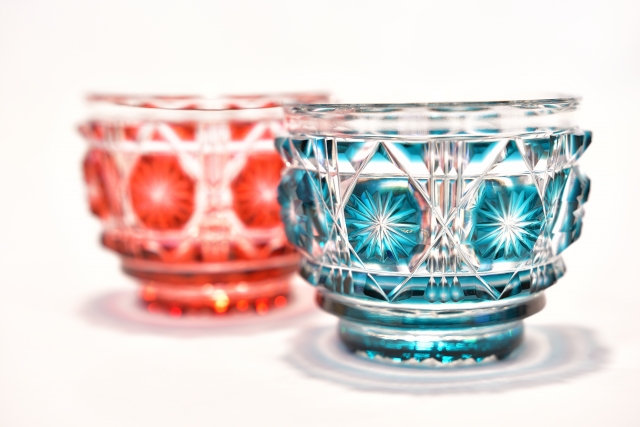
Away from the relentless pulse of Tokyo, in the quietude of a secluded bar or a serene tea lounge, you may be presented with a glass that does more than hold a drink. As it catches the fading twilight or the flicker of a candle, it projects a kaleidoscope of light—a phenomenon known as reflection—across the room.
This is Edo Kiriko. Born in the city of Edo (now Tokyo) in 1834, it is the result of a multi-generational dialogue between Western glass-cutting techniques and the meticulous sensibilities of Japanese artisans. To hold one is to hold a fragment of optical art; it is the craft of carving light itself into a tangible form.
2. Philosophy: An Inward Gaze Distant from European Crystal
While European crystal, such as Baccarat or Saint-Louis, pursues an “outward brilliance” designed to dazzle like a chandelier, the philosophy of Edo Kiriko is more introspective.
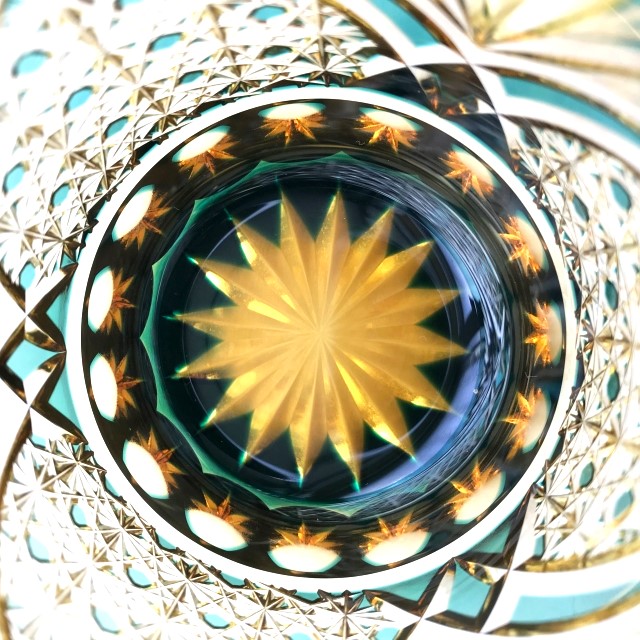
The artisan’s greatest devotion is often directed toward the view from the inside of the glass. The intricate geometric patterns—Kiku-tsunagi (chrysanthemum) or Kagome (basket weave)—are designed to be amplified by the refractive index of the liquid within. In that moment, a private universe unfolds exclusively for the one holding the glass. Unlike the “objective beauty” of the West, Edo Kiriko prizes a “subjective beauty” that speaks directly to the user’s inner landscape.
3. The Silent Prayer: Gifted Patterns and Their Meanings
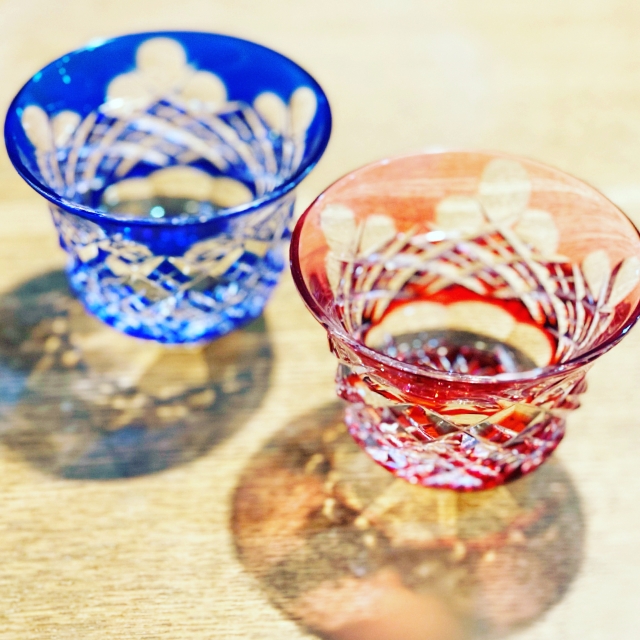
Every cut in Edo Kiriko carries a name and a profound heritage. Understanding these motifs adds an intellectual layer to the pleasure of selecting a piece, whether for oneself or as a meaningful gift.
- Kiku-tsunagi (Chrysanthemum Mesh): Resembling a field of interconnected chrysanthemums—the national flower of Japan—this pattern symbolizes longevity and rejuvenation. It represents a wish for “joy that lasts forever.”
- Kagome (Basket Weave): Based on the hexagonal mesh of bamboo baskets, this pattern has long been regarded as a talisman to ward off evil. It acts as a silent guardian for the safety of its owner.
- Asanoha (Hemp Leaf): As hemp grows straight and vigorous, this pattern symbolizes healthy growth and the resilient expansion of new endeavors or business ventures.
- Nanako (Fish Roe): Resembling a cluster of fish eggs, it signifies fertility and the continuous chain of prosperity and abundance.
4. Evolution: The Modern Silence of “Kuro” and Frost
True tradition is not a relic; it is a living evolution. Today, a new movement is emerging that resonates with the minimalist aesthetic of the global elite: the rise of “Kuro” (Black) Kiriko and Frost finishes.
- The Audacity of Black Kiriko: Carving opaque black glass is a feat of extraordinary difficulty. Since the artisan cannot see through the glass during the process, they must rely entirely on the sound of the wheel and the vibration in their fingertips. The result is a piece of architectural beauty—a stark, sophisticated contrast between deep shadows and brilliant transparency.
- The Softness of Frost: Unlike the sharp reflections of polished glass, the frosted finish diffuses light softly, like a morning mist. It offers a quiet presence that breathes depth into monochromatic interiors and contemporary spaces.
5. The Margin of Travel: The Stirring Silence of the Workshop
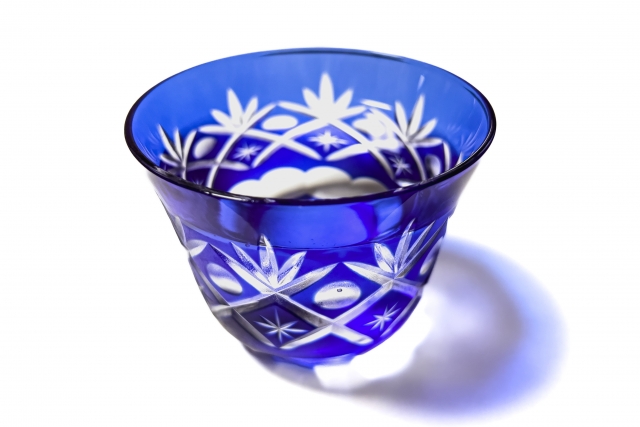
In the historic districts of Sumida and Koto, artisans work in focused silence. There are no sparks; only the quiet hum of a diamond wheel pressing against glass.
Watching a master carve complex geometries with almost no preliminary sketches feels like witnessing a virtuoso’s improvisation. Visiting these workshops to witness the “time of mastery” behind each piece is an experience as essential to understanding Tokyo as staying in its finest luxury hotels.
6. At Home: An Art Piece Defining Your Space
Edo Kiriko is not confined to the formal Japanese table. Its mathematical beauty harmonizes effortlessly with mid-century modern furniture and minimalist decor.
- In the Morning Light: Use a clear Kiriko bowl filled with water to hold seasonal fruit on a sunlit windowsill.
- At Your Desk: Find focus during a long night of strategy with sparkling water in a deep cobalt tumbler.
- In the Evening: Experience the “Black Kiriko” with a fine malt whisky, feeling the sharp, decisive edges of the cuts against your fingertips.
To own Edo Kiriko is not merely to possess a traditional craft; it is to curate a piece of the Japanese spirit into your lifestyle. Each time you hold this sculpture in your palm, you are reminded of the quiet Tokyo nights and the unwavering decisiveness of the master’s hand.