
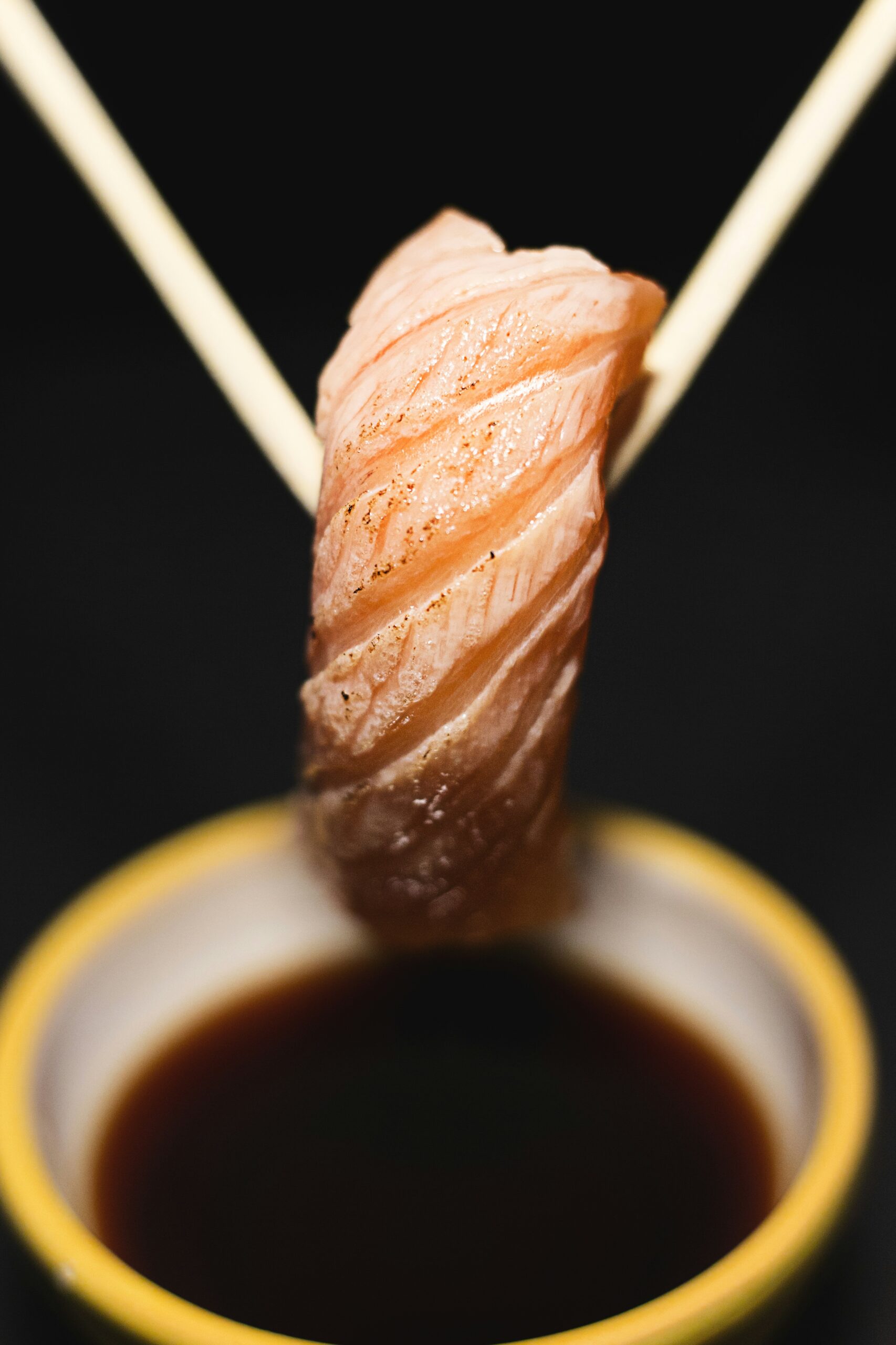
Sushi is not merely food; it is a culinary architecture built on principles of balance, precision, and historical evolution. Understanding its core components is the key to appreciating its depth.
I. The Five Essential Elements of Balance
The perfect piece of sushi is achieved through the harmonious interaction of five fundamental components, orchestrated by the craft of the artisan.
| Element | Japanese Term | Role and Significance |
| Rice | Shari | The “Soul” of sushi. Its temperature, consistency, and seasoning determine the foundation of the taste. |
| Main Ingredient | Neta | The topping (seafood, egg, etc.). Quality hinges on provenance, freshness, and the subsequent “Shigoto” (preparation work). |
| Vinegar | Su (Awasezu) | The essential ingredient for preservation and flavor, cutting the richness of the fish and providing the required tang. |
| Sugar | Satō (Awasezu) | Softens the vinegar’s sharp acidity, adding subtle depth and enhancing the overall savoriness of the rice. |
| Salt | Shio (Awasezu) | Sharpens and tightens the flavor profile of the seasoned rice and is crucial for curing the Neta (e.g., shime). |
Deeper Dive into the Components
1. Shari (The Rice)
The rice is the most critical factor often overlooked by novices. True shari must be seasoned with Awasezu (blended vinegar, sugar, and salt) and cooled to approximately body temperature (Hitohada). This specific temperature is calculated to momentarily melt the fish’s fat when it hits the palate, maximizing the burst of flavor. The art of the nigiri lies in the soft, delicate grip that allows the rice grains to fall apart (the “Horori” sensation) immediately upon entering the mouth.
2. Neta (The Topping)
Beyond sourcing premium quality, the modern sophistication of sushi lies in the Shigoto (the work done on the ingredient). This craftsmanship includes:
- Aging (Jukusei): Allowing the fish to rest for several days to convert proteins into concentrated umami compounds (inosinic acid).
- Curing (Shime): Treating the fish with salt and vinegar to remove excess moisture, firm up the texture, and enhance preservation (e.g., Kohada).
- Marinating (Zuke): Soaking leaner fish, like Tuna, in soy sauce to enrich its flavor and prevent oxidation.
3. Su (Vinegar)
Historically, vinegar was fundamental for preservation. Today, it defines the character of the shari.
- Rice Vinegar (Komezu): Provides a clean, bright acidity.
- Red Vinegar (Akazu): Made from aged sake lees, this vinegar imparts a deeper, richer umami and a subtle brown hue to the rice, often favored for pairing with robust fish like fatty Tuna (Toro) in traditional Edo-style sushi.
II. A Concise History: From Fermentation to Fine Dining
The history of sushi is a fascinating evolution from a practical method of food preservation into a refined, instantaneous cuisine.
The Origins: Narezushi (Nara Period)
- The earliest form, originating potentially from Southeast Asia, was Narezushi. Fish was salted and packed with cooked rice, left to ferment for months or years.
- The rice was simply a tool for the lactic acid fermentation process and was often discarded, with only the preserved, acidic fish being consumed. This was strictly a form of long-term preservation.
The Transition: Haya-zushi (Edo Period, Mid-17th Century)
- As life became faster, the long fermentation period was replaced. Chefs started consuming the fish and rice together, adding vinegar directly to the rice to achieve the acidic flavor without the lengthy fermentation. This was known as Haya-zushi (Fast Sushi).
The Climax: Nigiri-zushi (Edo Period, Early 19th Century)
- The form known globally today—the Nigiri-zushi (hand-pressed sushi)—was invented in the bustling city of Edo (Tokyo) by figures like Hanaya Yohei.
- It was conceived as a fast food for the masses, served from street stalls (Yatai). The seafood was prepared (simmered, cured, or marinated) to maximize flavor and ensure safety without refrigeration.
- This innovation allowed the final product to be created instantaneously upon order, transforming sushi from a time-intensive preservation technique into an immediate, ephemeral culinary art.
In conclusion, sushi is a profound culinary study, elevating simple components—the balanced warmth of the shari, the perfectly prepared neta, and the nuanced acidity of the vinegar—into a cohesive work of art. Its history traces a remarkable journey from a rudimentary method of preservation by fermentation centuries ago to the sophisticated, instantaneous cuisine of the Edo period. Today, a piece of nigiri represents not just a meal, but a moment of perfectly executed balance, reflecting a deep respect for both tradition and the fleeting perfection of nature’s bounty.