
Kobikicho Tounai
Ginza
Dinner
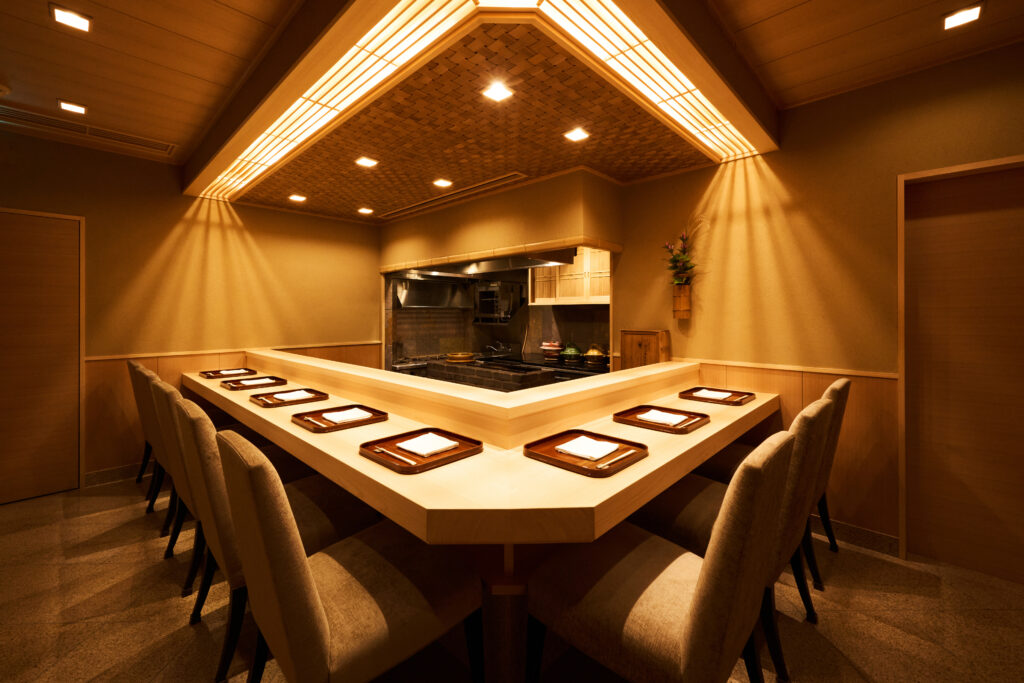
8 counter seats・1 private room (up to 4 guests)
Chef
Tounai Fumito
The Beginning
My journey into the culinary world began with a part-time job in high school. I worked at a conveyor-belt sushi restaurant, but unlike most, the sushi there was prepared by hand rather than by machine. Even as a part-time employee, I was entrusted with making rolls and had the opportunity to interact directly with guests. Many families dined there, and hearing them say “delicious” after tasting something I had prepared was a revelation—it made me realize how deeply rewarding this work could be.
At that time, I was not yet creating my own flavors, but the simple act of bringing joy to others through food moved me profoundly. I remember thinking, “If I could become a chef, how fulfilling life would be.” That moment became the starting point of my path.
I later enrolled in a culinary school, though I had not yet decided to specialize in Japanese cuisine. I simply knew I wanted to pursue a career connected to food.
It was during my studies that a series of encounters changed everything. I was given the opportunity to dine at my mentor’s restaurant, and through both the cuisine and the atmosphere, I came to appreciate the depth and beauty of Japanese cooking. That experience ultimately led me to dedicate myself to this tradition.
The Chef’s Journey
After graduating from culinary school, I began my training at a Japanese restaurant in Roppongi, where I remained for nearly fifteen years. For about five of those, I was entrusted as head chef—an experience through which I learned not only technique, but the true value of building trust with each guest.
While it is common in this profession to move from one kitchen to another, I chose to stay in the same place and deepen my craft. Of the roughly forty classmates I had in culinary school, only a handful—perhaps three or four—continue to work as chefs today. Perseverance is never easy, but I have always believed that by continuing steadily, one draws closer to the place one envisions.
Technique, of course, is essential. But to me, what matters even more is how one engages with people. Guests choose a restaurant not only for the food, but for the quiet assurance of knowing whose hands are behind it—feeling that this is a place they wish to return to because of the person.
During my years of training, I was fortunate to be guided by mentors I deeply respected—colleagues with whom I shared both the rigors and discipline of the kitchen. When I set out on my own, one such senior was working elsewhere. I spent nearly a year persuading him to join me, and today we run the restaurant together. It is a partnership built on nearly two decades of trust.
Philosophy of Taste
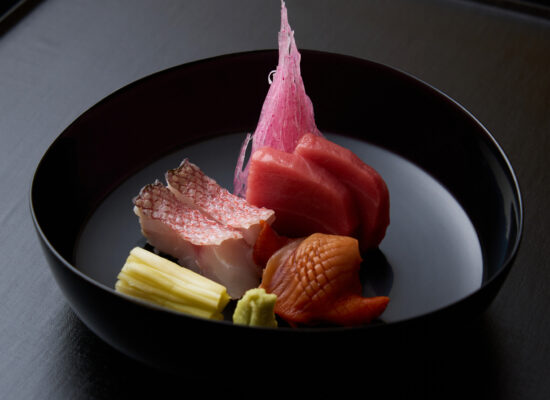
I compose each dish by listening closely to the rhythms of the sea and the passing of the seasons.
In Japan, where the four seasons are deeply felt, the condition of the sea and the flow of the tides can shift the peak of an ingredient in as little as a week. At times, I encounter fish that appear only once a year—or even once in several years. To be able to serve such rare ingredients at their very best is one of the greatest joys of being a chef.
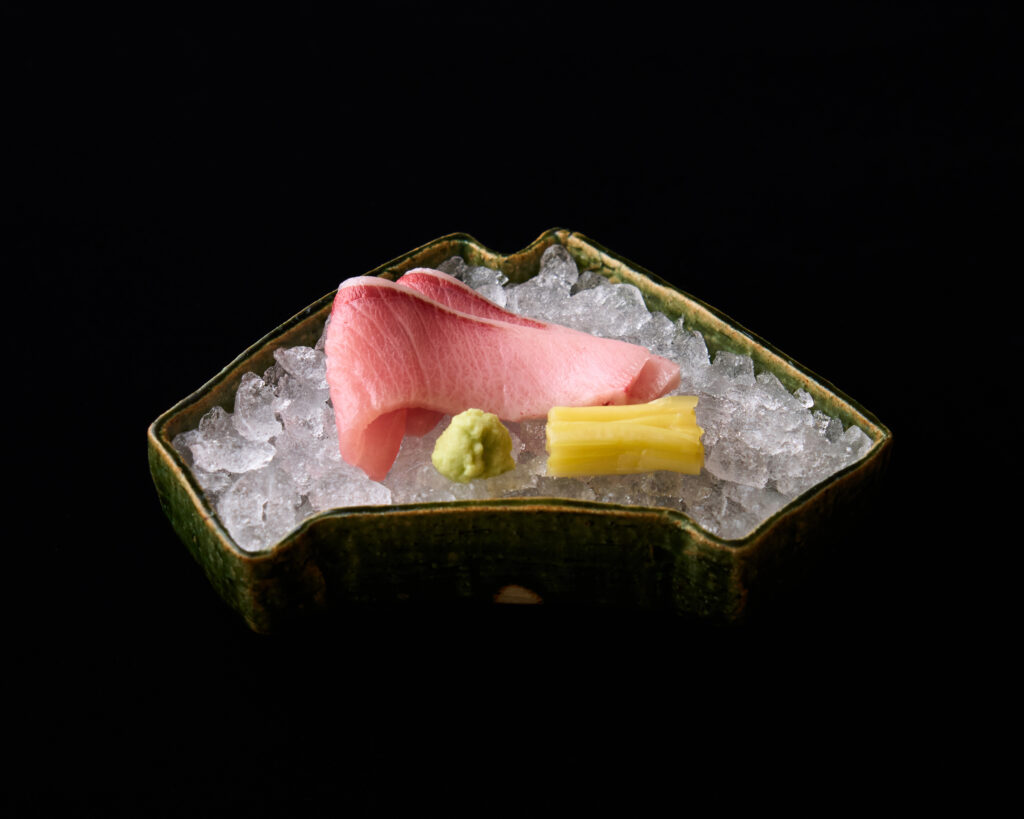
One fish I am particularly fond of is “hamadai”, prized for its deep, refined umami. When I come across one in exceptional condition, it is truly something special. To work with ingredients of this caliber, it is essential to cultivate strong relationships with trusted purveyors and to remain constantly attuned to the finest offerings of the moment.
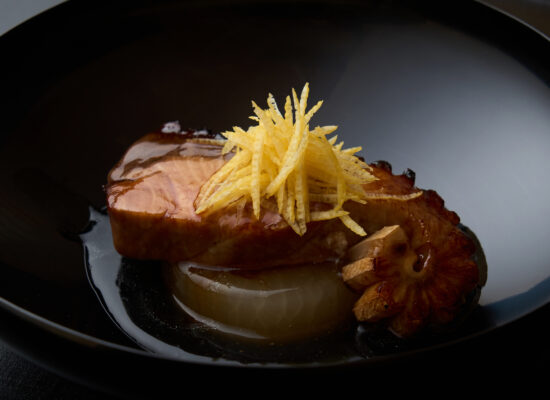
Among the dishes our guests especially enjoy are “unagi jibiyaki”—eel grilled over charcoal without steaming, creating a beautifully crisp, aromatic skin—and our freshly hand-cut soba, known for its delicate fragrance.
Being located near the Kabuki Theatre, we also like to introduce subtle, seasonal touches inspired by the monthly performances. For instance, in a month when whitebait appears on stage, we may reflect this in a dish. It is a quiet dialogue between Japanese culture and cuisine.
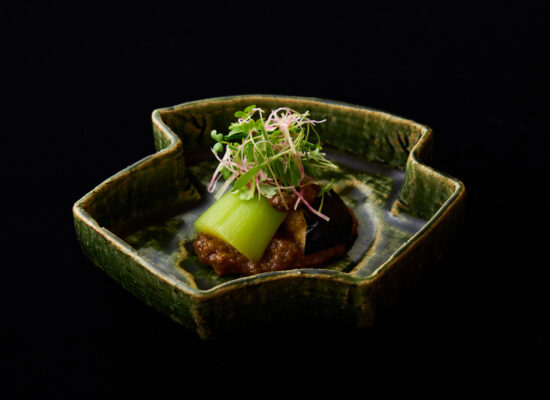
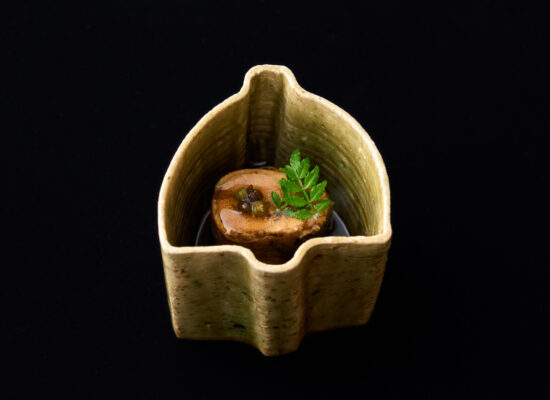
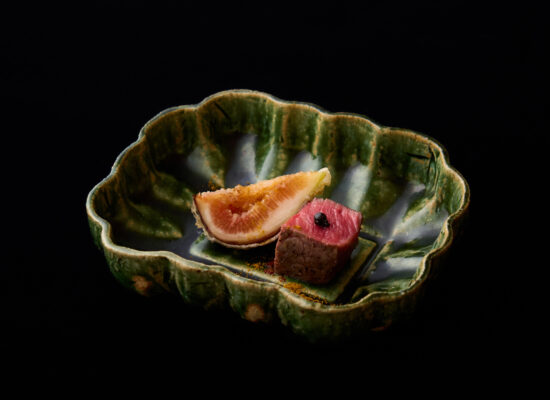
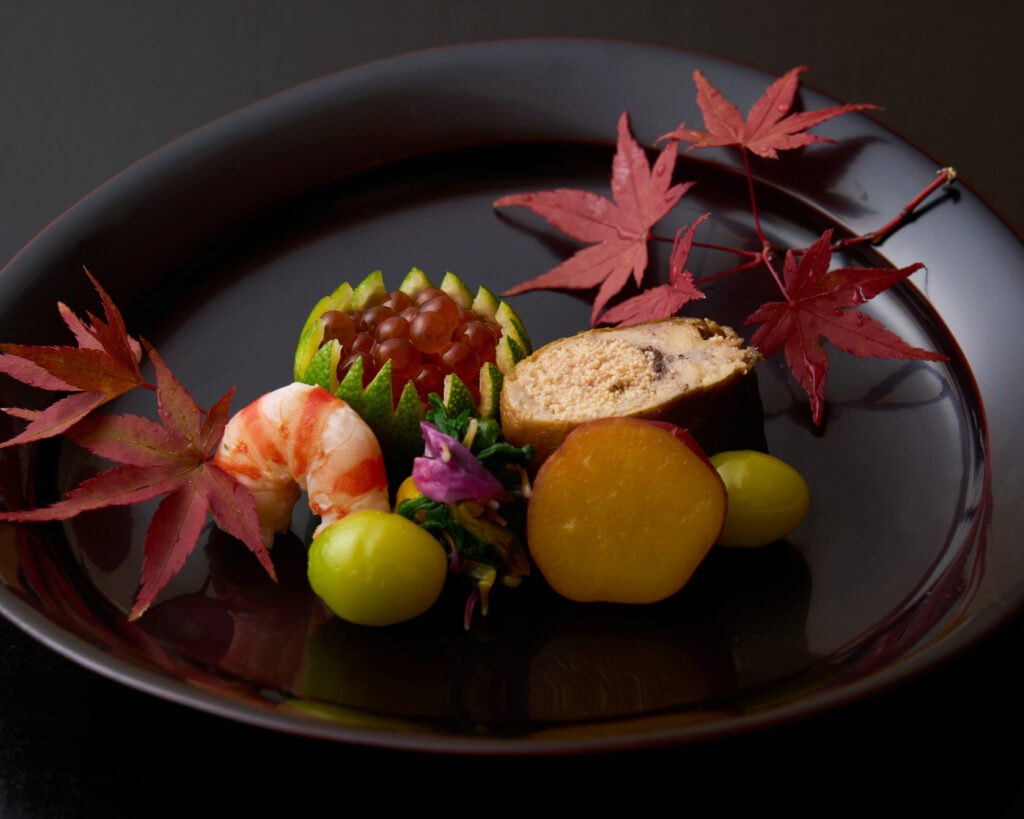
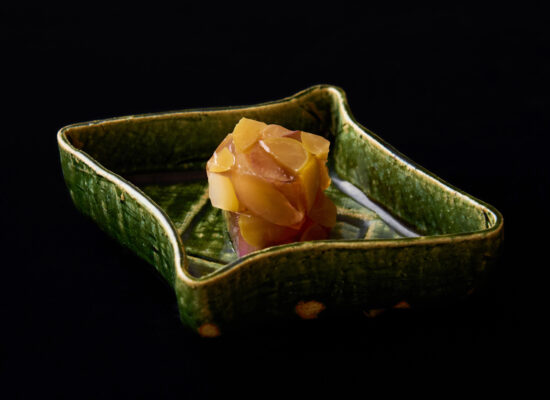
I also place great importance on the vessels that present the food. In particular, I have a deep appreciation for Edo-period antiques, especially “Gennai-yaki”—ceramics said to have been guided by the polymath Hiraga Gennai. Known for their vivid green and yellow glazes and finely raised patterns, these pieces carry a unique presence shaped by centuries of time. Together with the cuisine, they invite guests to experience Japan through all five senses.
At the same time, I value flexibility. We are happy to tailor the menu to our guests’ preferences—whether there are particular ingredients you wish to include or avoid, we will do our utmost to accommodate your requests.
While many fine dining establishments favor synchronized course menus, we prefer to welcome guests at the time of their choosing, allowing for a more personal and unhurried experience.
After 8 p.m., we also offer an à la carte selection, including grilled eel, hand-cut soba, fried fugu, rolled omelet, rice cooked in an earthenware pot, and seasonal tempura. Whether after an evening at the theatre or simply for a relaxed meal, we hope guests will enjoy a moment of quiet ease.
Our beverage selection includes not only a thoughtful range of sake, but also wines chosen to complement the cuisine.
Beyond the Kitchen
I have long been drawn to antiques, particularly vessels from the Edo period. To me, tableware is not merely a setting for the cuisine—it is an integral part of the dish itself, shaping the way it is perceived and remembered. Some of the pieces we use date back to that era, and I hope that, through both the food and the vessels, guests can sense the quiet depth of Japan’s history and aesthetic sensibility.
On a more personal note, I am most drawn to people of generosity and honesty—those with a certain breadth of character. Integrity, I believe, is essential; it is what naturally draws others in and forms the foundation of lasting connections.
Design and Ambience
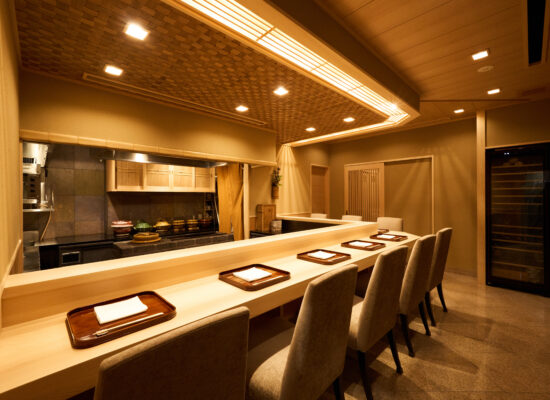
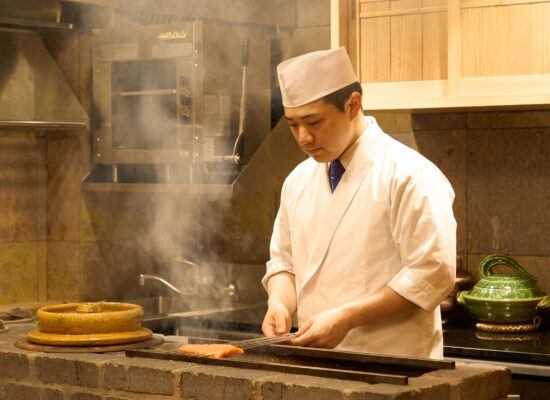
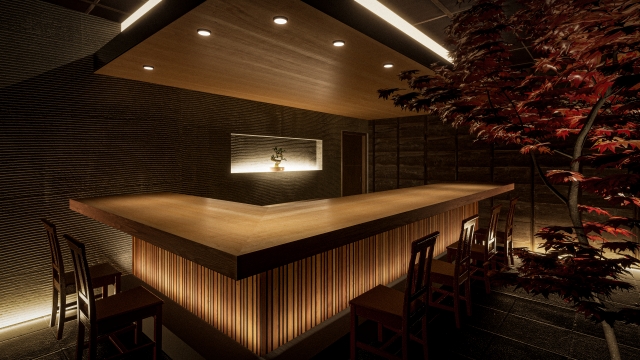
I believe the space of a restaurant is as essential as the cuisine itself. Rather than commissioning an outside designer, I chose to shape the interior gradually, drawing on the memories of places I have encountered over the years.
“I want walls like this—textured earthen surfaces, a certain quiet atmosphere.”
Layer by layer, these impressions came together to form the space you see today.
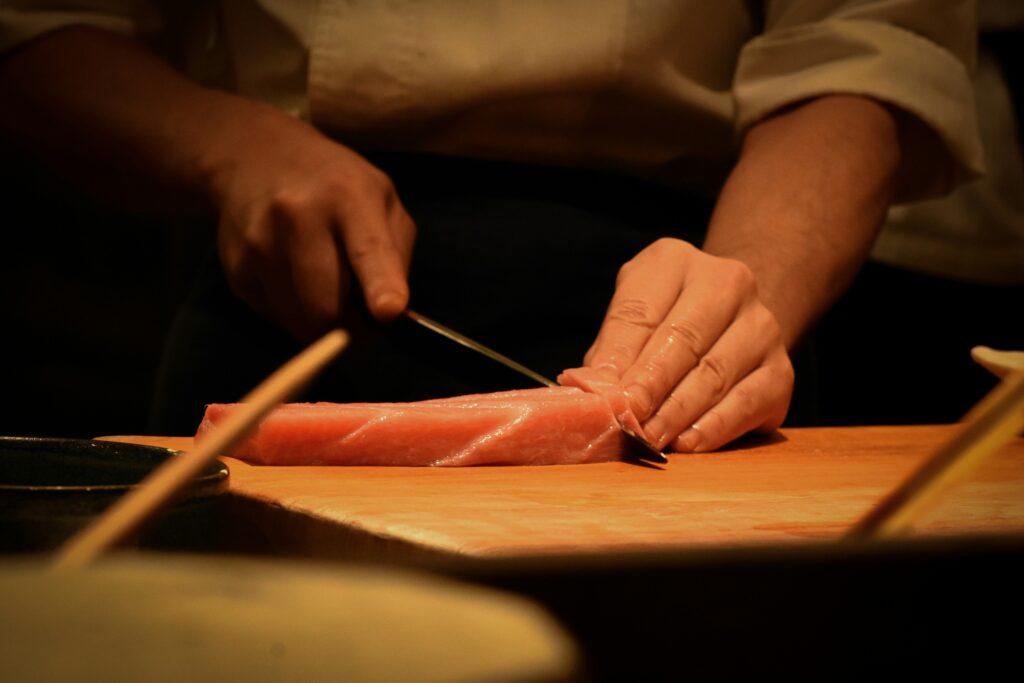
The kitchen is designed as an open counter, allowing guests to դիտ the process of each dish as it comes to life. I hope that the moments leading up to the finished plate become part of the dining experience itself.
I have also long been drawn to antiques, and among the pieces used here are vessels from the Edo period. One I hold particularly dear is “Gennai-yaki”, a style of pottery associated with the Edo-era polymath Hiraga Gennai, known for its distinctive colors and character.
Through not only the cuisine, but also the vessels that accompany it, I hope guests will sense the quiet beauty of Japanese aesthetics.
Future Vision
First and foremost, my priority is to continue nurturing this restaurant with care. At the same time, as a chef, I am deeply curious about the possibility of cooking abroad. If the opportunity arises, it would be exciting to travel with my team and open a restaurant in another part of the world.
While my foundation is in Japanese cuisine, I do not feel bound to tradition alone. In a different country, it could be equally compelling to explore new forms of expression—allowing the cuisine to evolve in response to its surroundings. No matter where I am, the techniques I have honed and the spirit I bring to cooking will remain unchanged.
And if it does not feel right, one can always return. To cook within a different culture, to encounter another way of life—these, too, are among the quiet pleasures of living.
To Our Guests
I would be truly delighted if a meal here becomes one of your lasting memories of Japan.
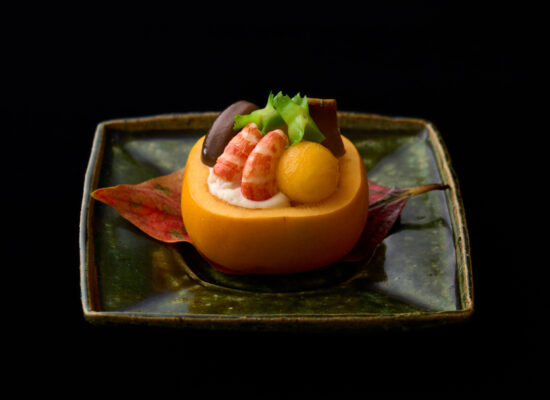
The atmosphere is designed to be relaxed and unpretentious—a place where you can feel at ease. With a thoughtful selection of tableware, I hope you will also sense a distinctly Japanese beauty in every detail.
Conveniently located near Tsukiji, Ginza, and the Kabuki Theatre, the restaurant is an easy stop before or after sightseeing or an evening performance.
We also offer a private dining room and warmly welcome guests with children. Encountering authentic ingredients and traditional vessels can be a meaningful introduction to Japan’s culinary culture—something akin to a form of food education.
Please feel free to visit us at your leisure. I look forward to welcoming you in Kobikicho, Ginza.
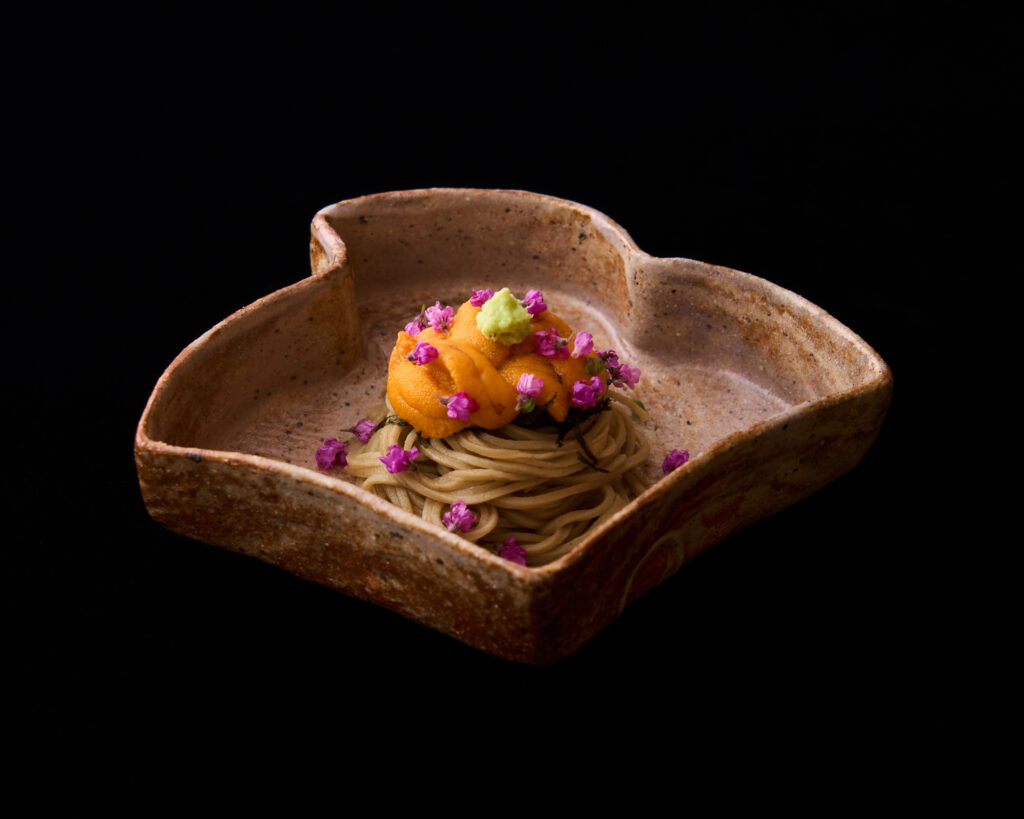
Why It’s Worth Your Time
Speaking with the chef about his ingredients, one begins to sense not only their origin, but the subtle rhythms behind each dish—the movement of ocean currents and the fleeting transitions of the seasons.
Inside, the space is quietly adorned with seasonal flowers and Japanese paintings, while each course is presented on carefully selected Edo-period antiques. Within this warm and intimate setting, guests are invited to savor the depth of Japanese cuisine and culture at a gentle, unhurried pace. A private dining room is also available, making it an ideal place for families to experience—and learn from—authentic Japanese cuisine through all five senses.
Another defining charm lies in the personalized hospitality. By sharing your preferences in advance, the chef will thoughtfully tailor the menu to incorporate desired ingredients, offering an experience akin to having a private chef.
When visiting Ginza or attending a performance at the Kabuki Theatre, this is a destination well worth seeking out.
Restaurant Information
Location
Kobikicho Kaisho 3F, 4-13-7 Ginza, Chuo-ku, Tokyo
Access
1-minute walk from Exit 5 of Higashi-Ginza Station (Hibiya Line)
Hours
18:00 – 24:00
Irregular holidays
Payment
Credit cards accepted
Electronic payments not accepted
10% service charge
Seating
8 counter seats
1 private room (up to 4 guests)
Smoking
Non-smoking throughout
Children
Welcome
Pets
Not permitted
Dress Code
To ensure that all guests can fully appreciate the delicate aromas of Japanese cuisine, we kindly ask that you refrain from wearing strong fragrances.
Choose Your Experience
Please note that the menu may change to reflect the freshest seasonal ingredients available.
Reservations made through Japan Vision Dining include a personal request to the chef for seating that offers a close view of the craft, subject to availability.
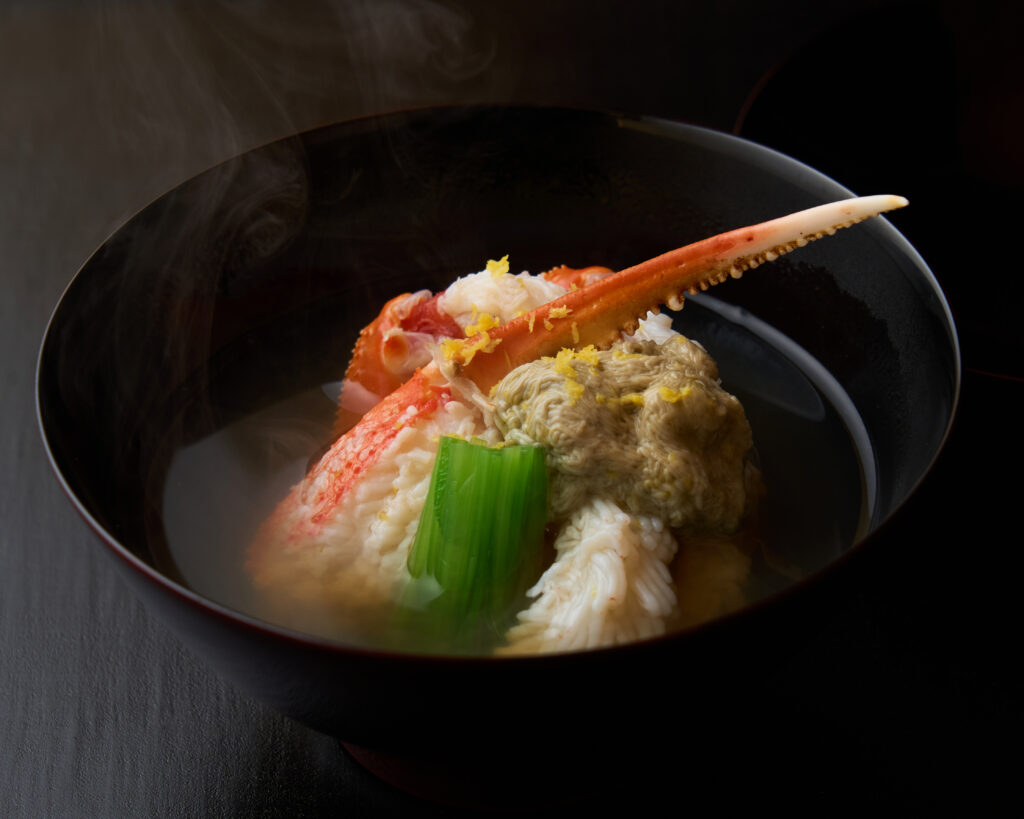
Dinner Omakase
JPY 50,578 (inclusive of tax and service charge)
A special course in which each dish is crafted from the finest seasonal ingredients at their peak on the day. Savor, at an unhurried pace, the bounty of Japan’s seasons and the sea.
Beautifully presented on Edo-period antique tableware, each course invites you to experience the depth and refinement of Japanese culinary culture.
Japan Vision Dining
A Private Experience, Tailored to You.
An entire restaurant, opened solely for you.
Engage directly with a master chef as each dish reveals the depth of Japanese cuisine.
A level of intimacy and access rarely available to the public.
Discover the story behind the master.