
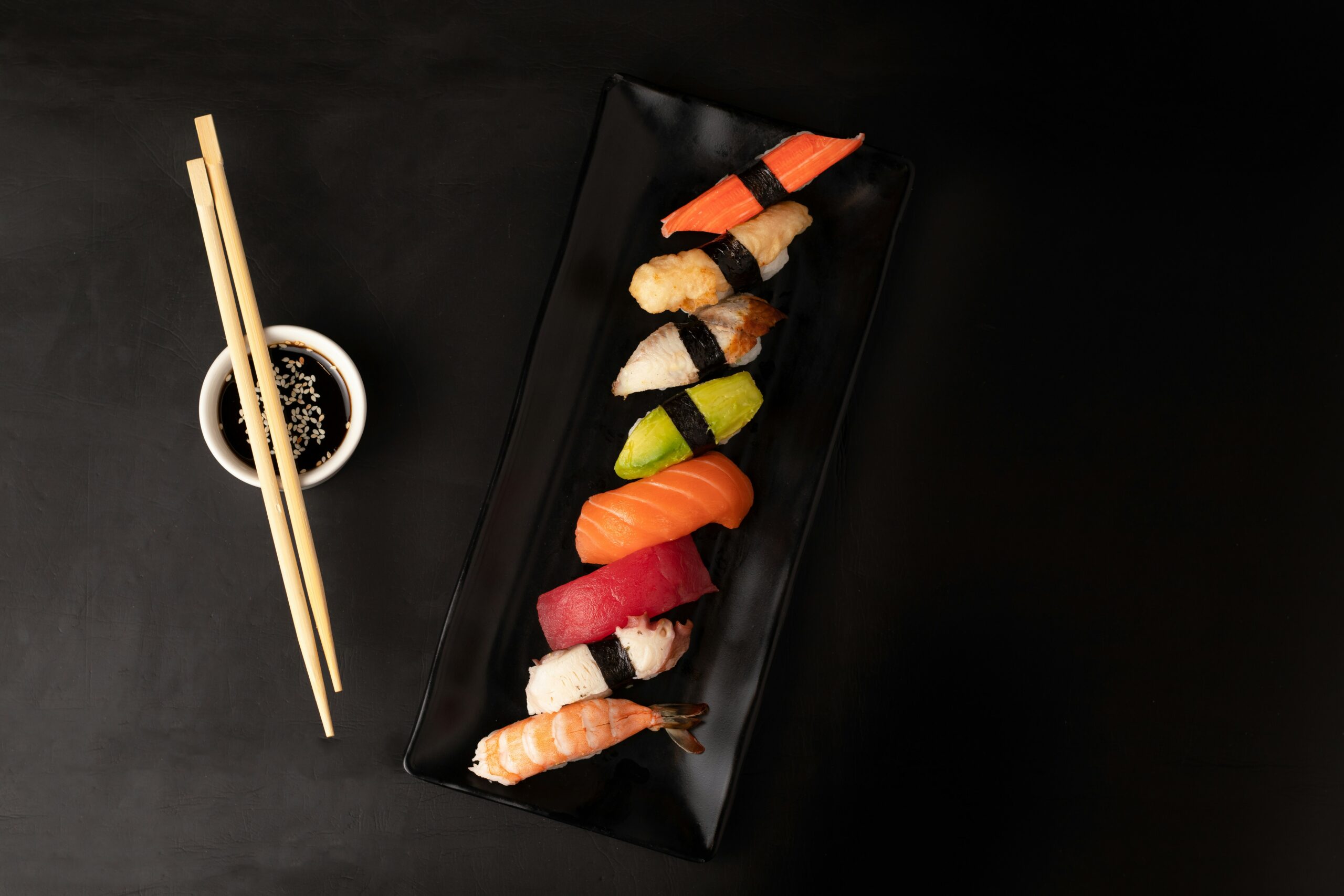
An omakase menu is not a list of recommendations.
It is a carefully composed experience—designed around balance, restraint, and flow.
Each piece has a purpose.
Understanding that purpose transforms sushi from a meal into a cultural encounter.
1. White Fish (Flounder / Sea Bream)
Flavor & Character
Delicate, clean, and understated. A quiet sweetness unfolds slowly with each bite.
Historical Context
In traditional Edomae sushi, white fish has long been a measure of a chef’s skill.
With little fat to hide imperfections, freshness and technique are immediately revealed.
Role in Omakase
The opening chapter.
It resets the palate and prepares the senses for what follows.
Suggested Pairing
A dry, light-bodied sake with minimal aroma—or no alcohol at all, to focus purely on taste.
Term Explained
White fish: Lean fish prized for subtle flavor rather than richness.
2. Squid
Flavor & Character
Soft yet crisp, with a refined sweetness that intensifies as you chew.
Historical Context
Squid is deceptively simple. Its quality depends almost entirely on knife work, making it a traditional benchmark of craftsmanship.
Role in Omakase
A continuation of restraint—maintaining delicacy while adding texture.
Suggested Pairing
A clean, neutral sake or a mineral-driven white wine.
Term Explained
Knife work: Precision cutting techniques used to control texture and release flavor.
3. Kohada (Gizzard Shad)
Flavor & Character
Bright acidity layered with umami and a lingering ocean aroma.
Historical Context
An icon of Edomae sushi. Preserved with vinegar, kohada reflects the ingenuity of Edo-period sushi as both flavor and preservation.
Role in Omakase
The moment the rhythm begins.
The palate awakens, and the course gains momentum.
Suggested Pairing
A sake with gentle richness that complements acidity, served at room temperature or slightly warm.
Term Explained
Vinegar curing: A traditional method to enhance flavor and preserve fish.
4. Horse Mackerel (Aji)
Flavor & Character
Aromatic and surprisingly sweet when impeccably fresh.
Historical Context
Long a staple of everyday Japanese cuisine, aji reveals its true quality only through expert handling—making it especially telling in fine sushi.
Role in Omakase
An approachable entry into blue-backed fish, bridging subtlety and depth.
Suggested Pairing
A crisp, refreshing sake with a clean finish.
Term Explained
Blue-backed fish: Oily fish known for pronounced aroma and umami.
5. Bonito (Katsuo)
Flavor & Character
Seasonal by nature—light and refreshing in early summer, richer and more complex in autumn.
Historical Context
A symbol of seasonality in Japanese food culture, cherished since the Edo period.
Role in Omakase
A palate reset, clearing the way for richer flavors ahead.
Suggested Pairing
A sharp, dry sake; lightly warmed styles also work well.
Term Explained
Seasonality: The idea that ingredients are best enjoyed at their natural peak.
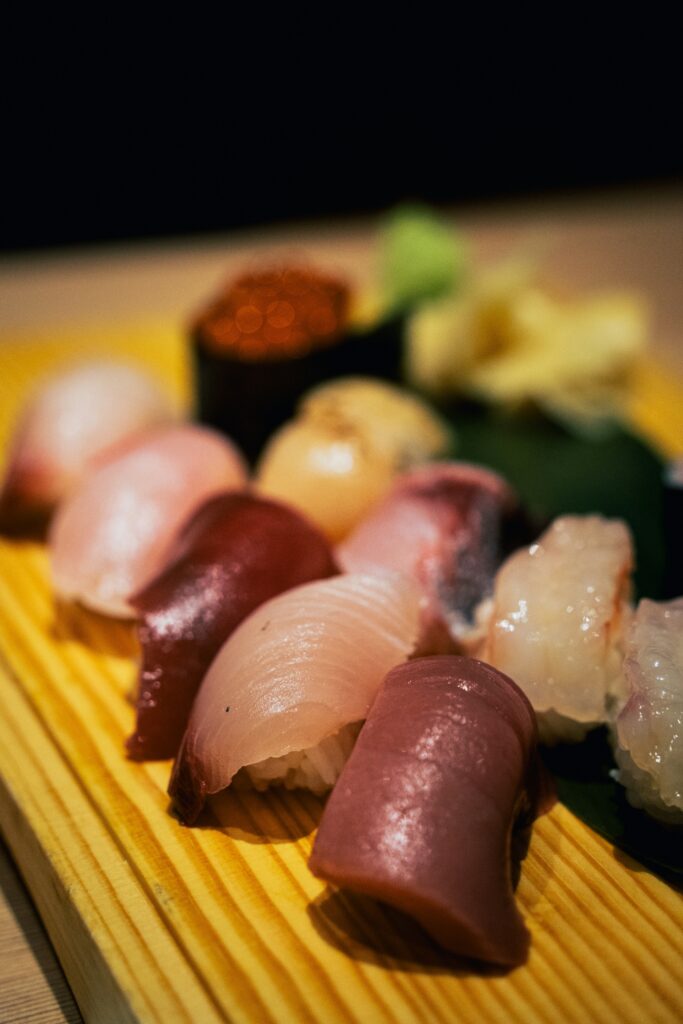
6. Lean Tuna (Akami)
Flavor & Character
Deep, savory umami with a subtle iron-like minerality.
Historical Context
The foundation of Edomae sushi. Before refrigeration, tuna was preserved by marinating—giving rise to the classic zuke style.
Role in Omakase
The backbone of the course, where satisfaction deepens.
Suggested Pairing
A balanced sake with noticeable umami.
Term Explained
Zuke: Tuna briefly marinated to enhance flavor and preservation.
7. Medium Fatty Tuna (Chutoro)
Flavor & Character
Elegant balance between lean meat and fat, offering harmony rather than intensity.
Historical Context
Its popularity grew with modern refrigeration, redefining how tuna was appreciated.
Role in Omakase
The natural progression of tuna—rich, yet restrained.
Suggested Pairing
A fuller-bodied sake with gentle roundness.
Term Explained
Toro: Fatty cuts of tuna, prized for texture and richness.
8. Fatty Tuna (Otoro)
Flavor & Character
Luxuriously smooth, melting on the tongue with profound sweetness.
Historical Context
Once overlooked for being too fatty, otoro became a symbol of luxury only in modern times.
Role in Omakase
A single moment of indulgence.
Restraint preserves its impact.
Suggested Pairing
A very dry sake or a crisp sparkling wine.
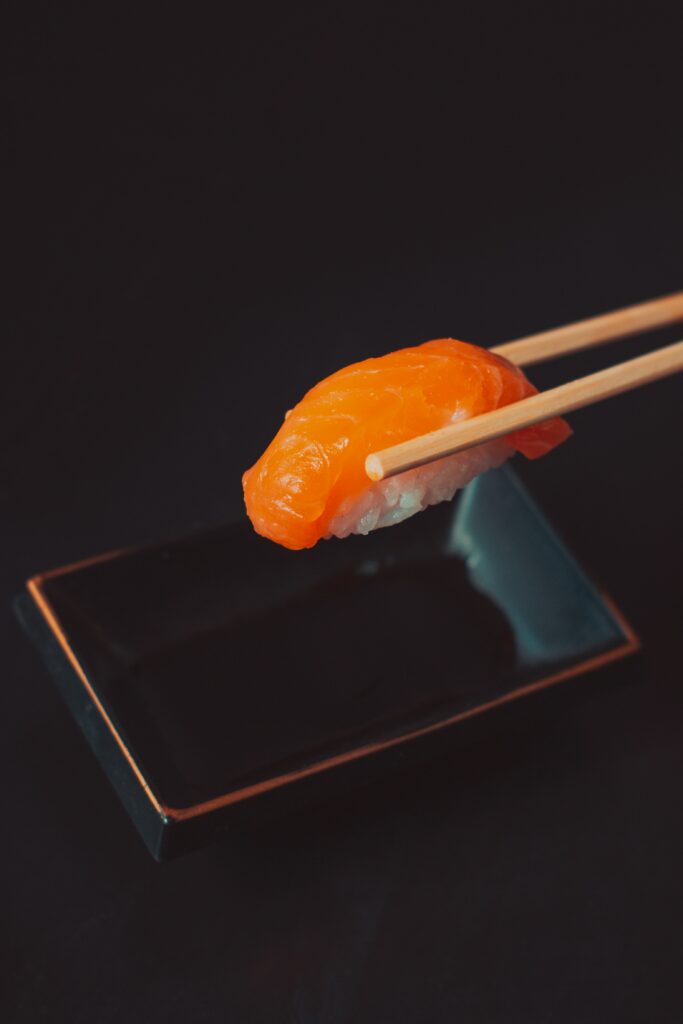
9. Salmon
Flavor & Character
Rich, buttery, and immediately satisfying.
Historical Context
Not part of traditional Edomae sushi; its presence reflects contemporary global tastes.
Role in Omakase
A modern accent—often included with international guests in mind.
Suggested Pairing
A fragrant sake or a light white wine.
10. Shrimp
Flavor & Character
Sweet and gently aromatic, often enhanced through careful cooking.
Historical Context
In Edomae tradition, shrimp showcased mastery of heat control rather than raw freshness.
Role in Omakase
A soft landing after richer flavors.
Suggested Pairing
Umami-forward sake, slightly warm.
11. Sea Urchin (Uni)
Flavor & Character
Creamy, sweet, and clean—never bitter when truly fresh.
Historical Context
Once regional, uni gained prominence as transportation improved.
Role in Omakase
A reward near the end of the journey.
Suggested Pairing
A sake with gentle sweetness or a refined sparkling wine.
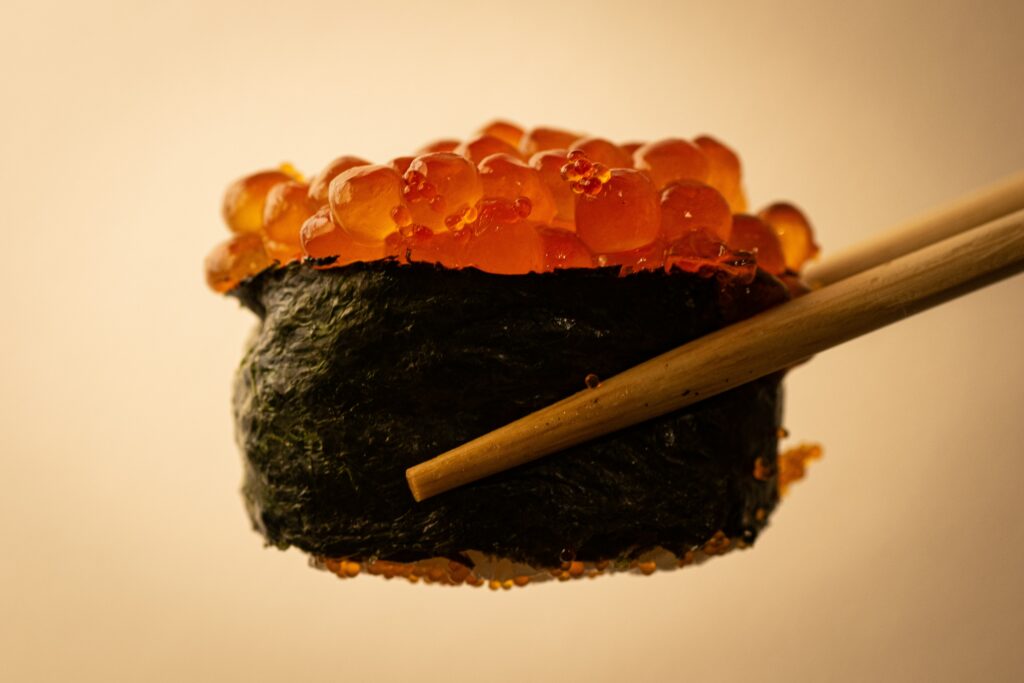
12. Salmon Roe (Ikura)
Flavor & Character
Each pearl bursts with salinity and depth.
Historical Context
A relatively modern luxury, embraced for its visual and textural appeal.
Role in Omakase
An expressive, celebratory accent.
Suggested Pairing
A sharp, dry sake to balance richness.
13. Sea Eel (Anago)
Flavor & Character
Soft, airy, and subtly sweet.
Historical Context
A classic Edomae closing piece, traditionally simmered to tenderness.
Role in Omakase
The quiet finale—gentle and reassuring.
Suggested Pairing
Warm sake or aged styles.
14. Tamagoyaki (Sweet Egg Omelet)
Flavor & Character
Sweetness, texture, and dashi vary by chef.
Historical Context
Often considered the culmination of a sushi apprentice’s training.
Role in Omakase
A dessert-like conclusion.
Suggested Pairing
Typically enjoyed without alcohol, allowing the meal to settle.
15. Rolls (Maki)
Flavor & Character
Simple and grounding.
Historical Context
Developed to provide closure and satisfaction.
Role in Omakase
To gather the experience and gently bring it to an end.
Suggested Pairing
Optional; preference-based.
A Quiet Understanding of True Luxury
True luxury in sushi is never about abundance or display.
It lies in awareness—of sequence, balance, temperature, and restraint.
Each piece arrives not as an isolated delicacy, but as part of a carefully composed narrative, shaped by centuries of craft and cultural sensibility.
When the role of each neta is understood—why it appears at that precise moment, how it prepares the palate for what follows—omakase transcends dining. It becomes a quiet dialogue between chef and guest, between past and present, between technique and intuition. Silence, timing, and subtlety are as essential as the fish itself.
To truly enjoy authentic sushi in Japan is to engage with this language.
By deepening your understanding of ingredients, history, and structure, each visit to the counter becomes richer, more meaningful, and profoundly personal.
We invite you to continue exploring Japan’s culinary culture through our other features—where food, history, and place converge—so that your encounters with authentic sushi in Japan may be approached with deeper understanding, sharper awareness, and a richer sense of context.